The relaxed attitude of the current younger generation is not just a coincidence, it is now a constant phenomenon in our society. This tendency in youths has been skyrocketing in popularity as “It’s not that deep culture” takes hold of the social scene. “It’s not that deep culture” is the combination of trying to be nonchalant and not digging deeper into hidden meanings as it’s “not that deep.” This social attitude has been the result of more technology, social media, and how many teens can sometimes use it to shirk blame off of themselves.
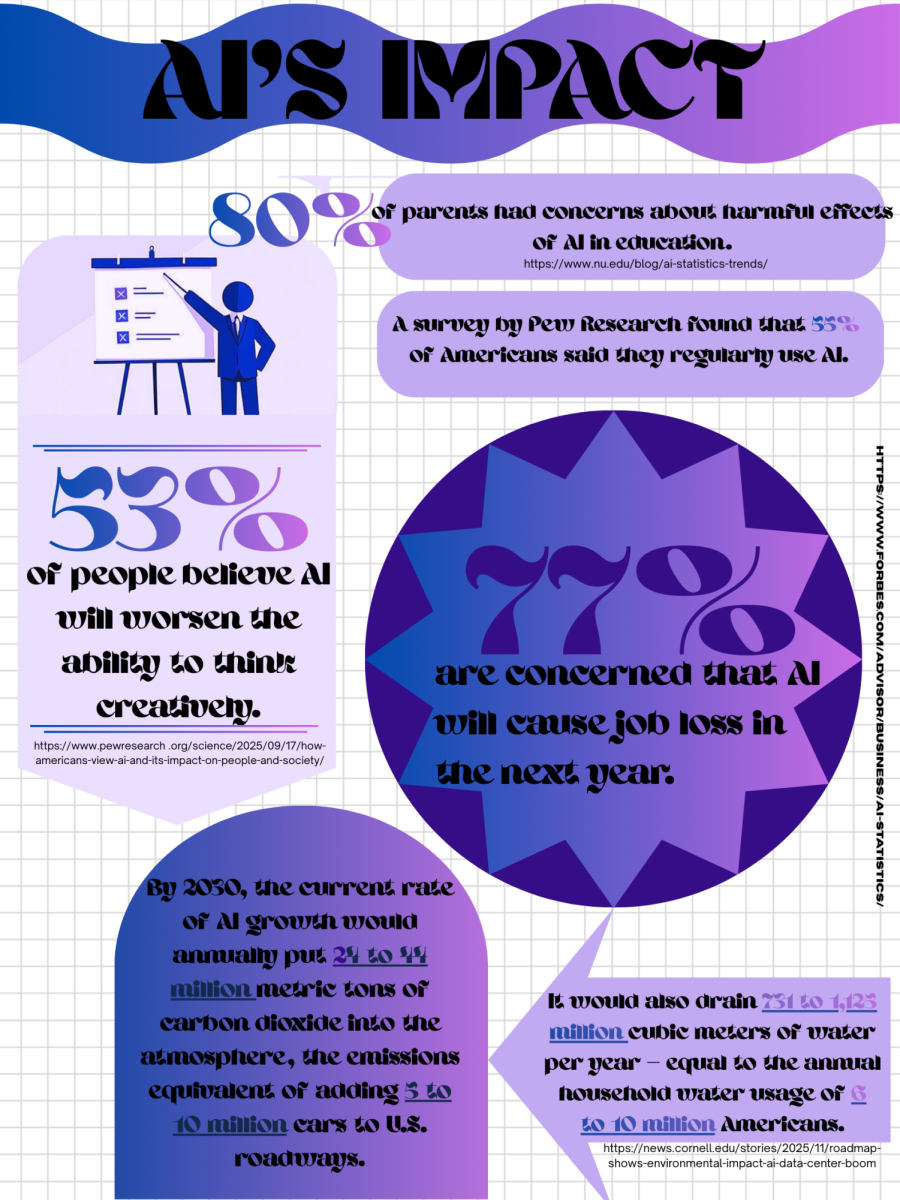
On the technology side of this trend, the recent influx in the usage of Artificial Intelligence (AI) has played an important part in why this is now seen in schools across the country. When students use AI for assignments, students gain no knowledge on the topic itself. So when discussing a literary device it may be harder for the AI bot to pick up on the nuanced innuendos. For the student learning about this topic in class and using AI on the assignments, they may see no deeper meaning as they list off the AI’s summary. Thus rendering themselves less advanced in hidden meaning than they should be. When asked to interpret the implications of the work, a student may respond with “It’s not that deep”.
This is how many students and teens use it to rid themselves of the responsibility of fully grasping the concept that the author is trying to have. Armed with the excuse of “It’s not that deep”, it makes it harder for the educator to have the student fully acknowledge the deeper meaning of the piece of literature they were discussing. This doesn’t just go for assignments, in the social aspect of life, let’s say in a relationship, this is often also used as an excuse. When in a relationship, one of the partners may say something that is offensive or rude to the other, then when confronted about this behavior the use of “It’s not that deep” can also come into play. However, not just in romantic relationships can this happen, in friendships and any other personal relationship this could be used as a means of refusing responsibility. While some might’ve not seen this in real life, it’s very easy to find such examples online.
Online, more specifically, has social media been able to spread and flourish. Many times has an offensive remark or gesture been able to slide as supporters of whatever offence took place use “ It’s not that deep” to dispel any backlash against the poster or the movement. An excellent example of this is the OK hand sign. Using all the fingers of the hand to form an O and a K, some supporters of a supremacist group have now adopted this seemingly innocent hand sign and use it in everyday life. This practice is known as a “Dog Whistle” as it’s only seen by those a part of the group.
While this may seem far-fetched, in an article released by NPR titled “The ‘OK’ Hand Gesture Is Now Listed As A Symbol Of Hate”, released on September 26, 2019 and written by Bobby Allyn is able to make a great dive into this. In this article the Anti-Defamation League marked this as a symbol of hate, while it may have different meaning in other places, social media platforms such as 4chan publicized this deeper meaning. According to the said article, “Over the past couple years, we’ve seen that the hoax was essentially successful in being applied by actual white supremacists.” Now brings in the question “What does the O and the K stand for then, if not to be ‘OK’?”, the dog whistle version of this gesture actually contains no O or K. In the dog whistle version, the O is meant to be a P and the K is meant to be a W, thus transforming the letters from OK to WP, and to certain supremacists WP stands for “White Power.”
At first, this might seem far-fetched, but after delving into this topic it is clear that this hand sign was actually used for hate, but “It’s not that deep” culture is slowly killing this kind of discernment. With nobody to look into the deeper meanings, these dog whistles would be able to go unnoticed and many supremacists would be able to avoid notice as “it’s not that deep.” These types of dog whistles rely on no one looking deeper, and with “it’s not that deep” culture staying on the rise many will stop noticing these changes, or simply state that “it’s not that deep,” seemingly excusing themselves of their transgressions.
“It’s not that deep” culture is far more of a trend and issue than many realize. It’sBeing used as a shield for deflecting responsibility in personal connections, an excuse for students to stop looking for the deeper meaning in literature and in life, then being used as a way to have people not notice dog whistles which rely on naivety. While some parts of life have no deeper meaning, most parts require a discerning eye and the education of being able to see past a simple meaning or cover.